Approved jurisdiction hub
Heat Exchanger Buyer in New Hampshire
Prepare a heat exchanger submission for equipment located in New Hampshire using the jurisdiction's documented process-industry and freight context together with the actual equipment record.
New Hampshire process-industry context
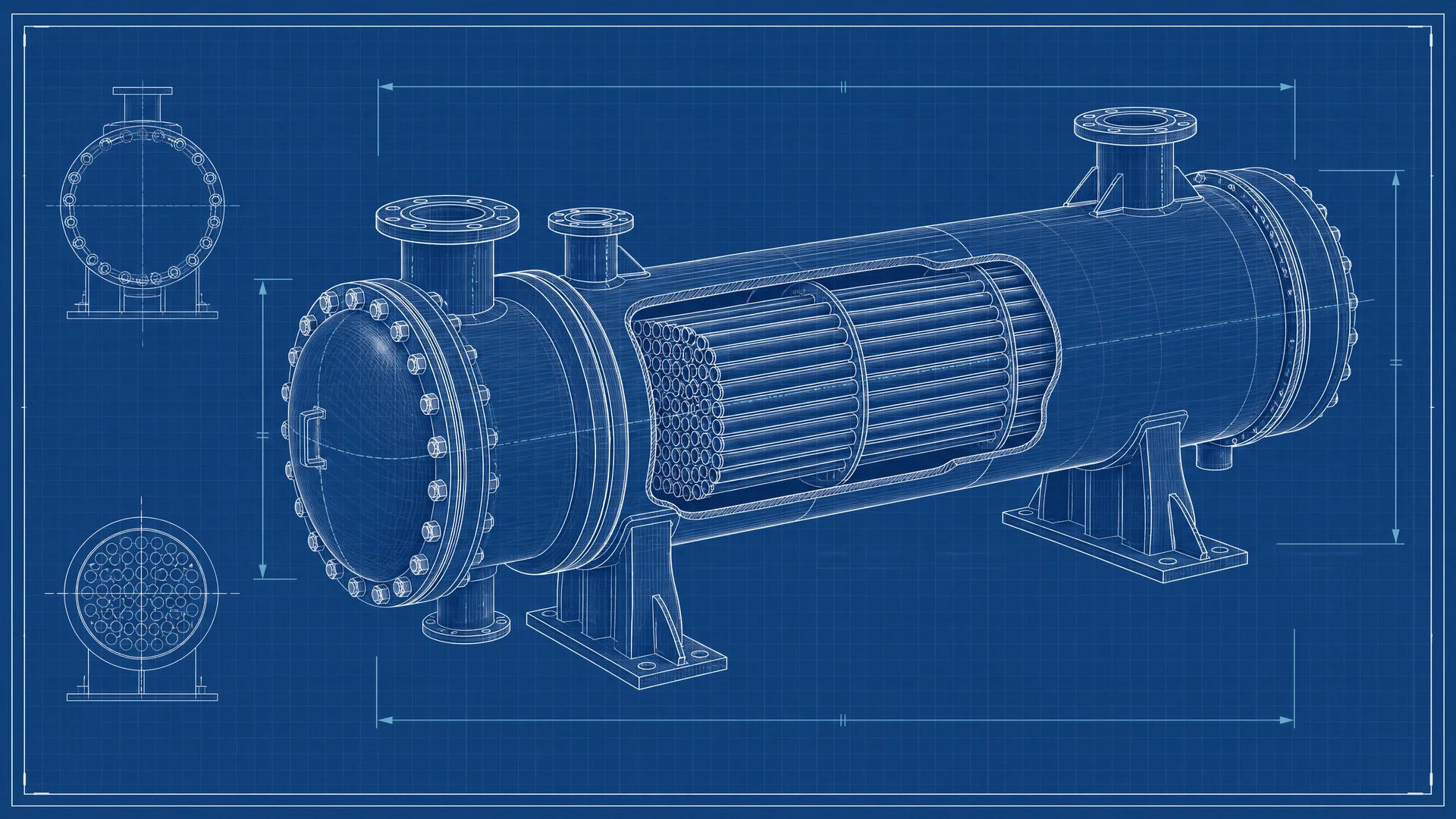
New Hampshire’s industrial economy is driven by advanced manufacturing, technology, and life sciences rather than heavy petrochemical or refining sectors. The state’s process-industry context relevant to industrial heat exchangers includes: **Food and Beverage Processing:** The state is home to significant food and beverage manufacturing operations, including large-scale facilities for companies like Lindt & Sprüngli (USA) Inc. and Coca-Cola Bottling Company of Northern New England [1]. These facilities require heat exchangers for pasteurization, cooling, and general temperature control. **Biotech and Life Sciences:** New Hampshire has a growing life sciences sector, with companies like Lonza and the Advanced Regenerative Manufacturing Institute (ARMI) driving innovation [2]. Pharmaceutical and biotech manufacturing heavily relies on sanitary heat exchangers for precise temperature regulation in production processes. **Power Generation:** Over half of New Hampshire's electricity generation comes from nuclear energy, primarily from the Seabrook Station nuclear power plant. Natural gas accounts for approximately 25% of generation, while biomass and hydropower also contribute [3]. Heat exchangers are critical components in these power generation facilities for cooling and thermal management. **Advanced Manufacturing:** The state has a strong presence in advanced manufacturing, including industrial machinery, electronics, and fabricated metals. Companies like BAE Systems and GE Aviation operate in the state, utilizing heat transfer equipment in various manufacturing processes and testing facilities [2].
New Hampshire freight and logistics context
New Hampshire's freight network is multimodal, supporting the movement of industrial equipment like heat exchangers: **Highway System:** The state relies heavily on trucking for freight movement, with major corridors like I-93, I-89, and I-95 facilitating transport throughout New England and into Canada [4]. **Maritime Port:** The Port of Portsmouth, located on the Piscataqua River, provides deep-water access for bulk and break-bulk cargo. It is an effective means for heavy freight shipping and receiving, which is crucial for oversized industrial equipment [5]. **Rail Network:** New Hampshire's freight rail system includes 10 freight railroads operating over 300 miles of track. Recent developments include the revival of rail freight service in northern New Hampshire by the Vermont Rail System, enhancing bulk transport capabilities [6].
Prepare the equipment record
Describe the actual exchanger and site rather than relying on geography alone.
- Equipment type, duty, manufacturer, model, and serial number
- Condition, materials, dimensions, weight, and quantity
- Installation, dismantling, loading, and access facts
- Photos, nameplate, drawings, and inspection records
Page-specific questions
Frequently asked questions
How does New Hampshire affect an equipment review?
The equipment origin helps frame access, dimensions, loading facts, and transportation questions. Any project responsibilities require equipment-specific written review.
What should a seller in New Hampshire provide?
Provide the exchanger type, service, condition, materials, dimensions, weight, location, access facts, photographs, nameplate, and available technical records.
Are dismantling, loading, or freight guaranteed?
No. Those functions may be included only after written review of scope, safety, access, responsibilities, schedule, and commercial terms.
Technical references
Secure equipment submission
Request a review for this heat exchanger
Required fields are marked. Share the equipment, condition, location, access, and supporting records available for review.