Approved jurisdiction hub
Heat Exchanger Buyer in Hawaii
Prepare a heat exchanger submission for equipment located in Hawaii using the jurisdiction's documented process-industry and freight context together with the actual equipment record.
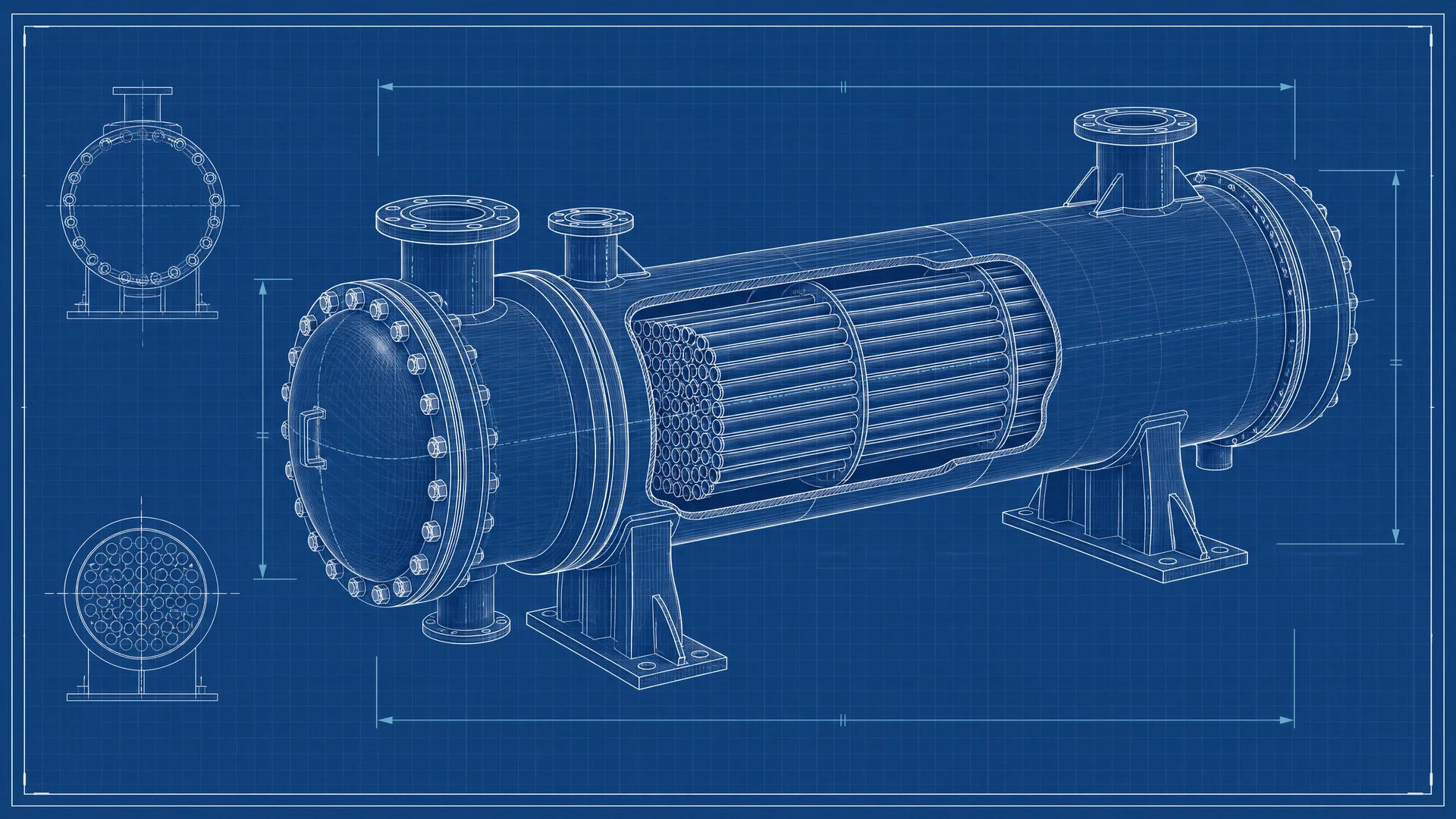
Hawaii process-industry context
Hawaii’s unique island geography heavily shapes its process industries. The state has the highest share of petroleum use in the United States, with approximately 92% of its total energy consumption derived from petroleum in 2023 [2]. Par Hawaii operates the state's only petroleum refinery in Kapolei, Oahu, which processes up to 94,000 barrels per day [3]. Heat exchangers are integral to this refinery's distillation and conversion processes, managing temperatures up to 650ºF as crude oil is separated into fractions and further upgraded into jet fuel, diesel, and gasoline [4]. Par Hawaii also maintains a significant logistics network, distributing fuels via pipelines and barges to major harbors [3].
In the power generation sector, Hawaii is transitioning toward renewable energy. In 2025, about 34% of the state's total electricity generation came from renewable sources [2]. The Hawaiian Electric Company (HECO) operates the Kahe power plant on the west coast of Oahu, where seawater is used to cool operational fluids, presenting specific challenges such as biofouling in heat exchangers [5]. The state also utilizes biomass and geothermal energy. The H-POWER facility in Campbell Industrial Park, owned by the City & County of Honolulu, burns municipal solid waste to produce steam that drives a turbine generator, processing up to 3,000 tons of garbage per day [6]. The Puna Geothermal Venture plant on the Big Island provides 30 MW of power by tapping volcanic heat [7].
Wastewater treatment is another critical application. The Sand Island Wastewater Treatment Plant in Honolulu processes an average of 56.01 million gallons per day and is undergoing upgrades to incorporate biogas recovery systems that generate heat and electricity for the plant [8] [9].
Research references: [1] [2] [3] [4] [5] [6] [7] [8] [9] [10]
Hawaii freight and logistics context
Hawaii relies almost entirely on maritime and air transport for inter-island and mainland logistics. The State of Hawaii Department of Transportation (HDOT) oversees the commercial harbor system, which consists of ten self-funded ports [10]. Honolulu Harbor serves as the primary hub, receiving, consolidating, and distributing practically all overseas cargo shipments [11].
Logistics in Hawaii require specialized knowledge due to the state's geographic isolation. Inter-island freight operations, port-specific regulations, and the need for seamless coordination between mainland supply chains and local delivery networks create a distinct logistics environment [11]. Approved Freight Forwarders, for example, operates terminals on Oahu, Maui, the Big Island, and Kauai, providing end-to-end services that navigate port congestion and limited warehousing space [11].
Research references: [1] [2] [3] [4] [5] [6] [7] [8] [9] [10]
Prepare the equipment record
Describe the actual exchanger and site rather than relying on geography alone.
- Equipment type, duty, manufacturer, model, and serial number
- Condition, materials, dimensions, weight, and quantity
- Installation, dismantling, loading, and access facts
- Photos, nameplate, drawings, and inspection records
Page-specific questions
Frequently asked questions
How does Hawaii affect an equipment review?
The equipment origin helps frame access, dimensions, loading facts, and transportation questions. Any project responsibilities require equipment-specific written review.
What should a seller in Hawaii provide?
Provide the exchanger type, service, condition, materials, dimensions, weight, location, access facts, photographs, nameplate, and available technical records.
Are dismantling, loading, or freight guaranteed?
No. Those functions may be included only after written review of scope, safety, access, responsibilities, schedule, and commercial terms.
Technical references
- Reference 1 · www.eia.gov
- Reference 2 · www.parpacific.com
- Reference 3 · heat-exchanger-world.com
- Reference 4 · heatxglobal.com
- Reference 5 · www.hawaiianelectric.com
- Reference 6 · www.hawaiianelectric.com
- Reference 7 · www.honolulu.gov
- Reference 8 · www.honolulu.gov
- Reference 9 · hidot.hawaii.gov
- Reference 10 · www.inboundlogistics.com
Secure equipment submission
Request a review for this heat exchanger
Required fields are marked. Share the equipment, condition, location, access, and supporting records available for review.