equipment review
Double-Pipe Heat Exchanger Buyers
Double-Pipe Heat Exchanger Buyers begins with a configuration-specific evidence package. The review focuses on concentric inner and outer pipes, often assembled as hairpin sections, current condition, documentation, location, and project scope without promising price, purchase, or timing.
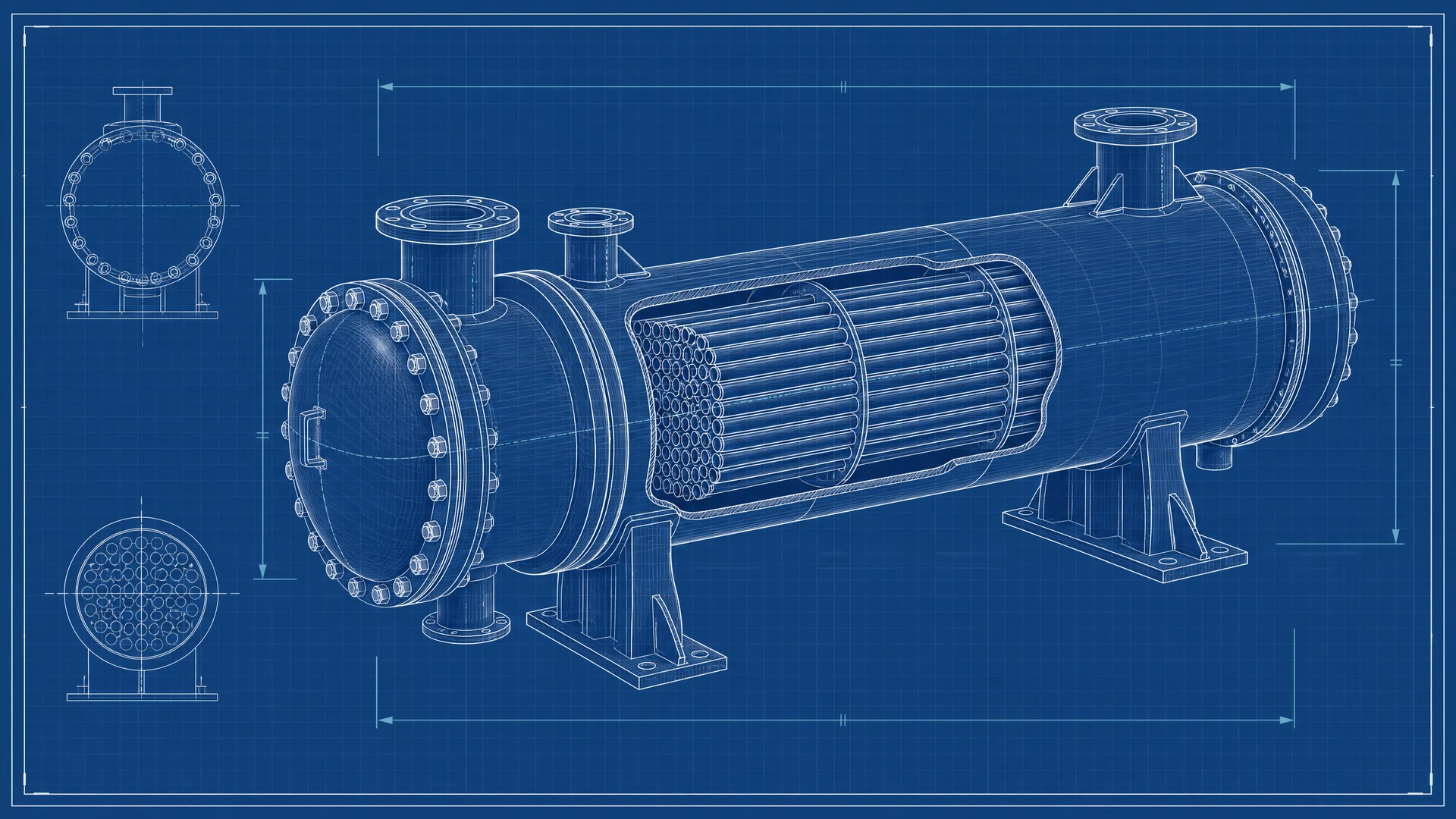
Identify double-pipe heat exchanger
Document concentric inner and outer pipes, often assembled as hairpin sections. Distinguish the actual configuration and service with photographs, markings, dimensions, and records rather than relying on a category name alone.
What to inspect
Record hairpin count, straight length, return bends, supports, flange classes, and inner- versus outer-pipe condition.
- Full equipment and end-view photographs
- Readable nameplate and equipment-tag images
- Visible condition, missing parts, and repairs
- Installation, access, dimensions, and weight
Records that support review
Useful records include pipe sizes, metallurgy for both flow paths, design conditions, duty, and drawing or item numbers. Do not guess when a field is unknown; mark it unavailable and show the physical evidence that exists.
How the evidence affects the next step
The review considers whether the complete hairpin assembly or identified sections are suitable for further evaluation. Dismantling, loading, freight, timing, and payment terms are conditional on written scope and commercial agreement.
Double-Pipe Heat Exchanger Buyers condition and logistics record
For double-pipe heat exchanger buyers, record observable condition, installation state, dimensions, weight, current location, site access, loading capability, and timing constraints before requesting commercial review.
Page-specific questions
Frequently asked questions
Can double-pipe heat exchanger be submitted in used or damaged condition?
Yes. New, unused-surplus, used, damaged, and scrap-condition equipment may be submitted. The condition and documentation determine the appropriate evaluation path.
What information is needed first?
Start with pipe sizes, metallurgy for both flow paths, design conditions, duty, and drawing or item numbers, together with current photos, location, installation state, access, dimensions, weight, and seller authority.
Does submitting guarantee a purchase or pickup?
No. Submission requests an evaluation only. Purchase, scope, price, payment, removal, loading, freight, and timing require separate written confirmation.
Technical references
Secure equipment submission
Request a review for this heat exchanger
Required fields are marked. Share the equipment, condition, location, access, and supporting records available for review.