Water and Wastewater asset evaluation
Sell Welded-Plate Heat Exchangers From Water and Wastewater Facilities
Request an evidence-led buying review for welded-plate heat exchangers from a water or wastewater facility. The review combines configuration, service, condition, documentation, location, access, and scope without promising purchase, value, or timing.
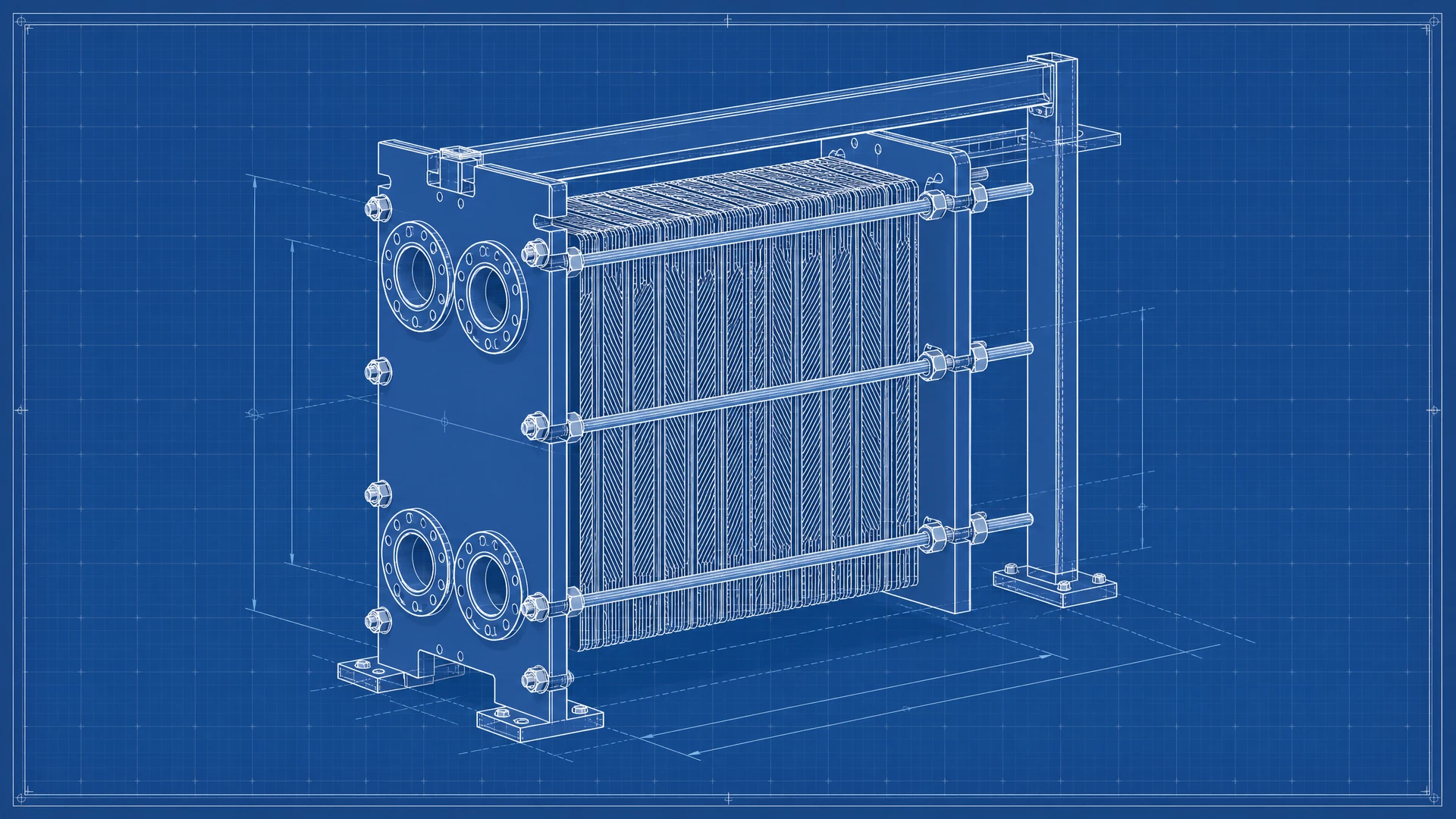
Welded-Plate Heat Exchangers in Water and Wastewater
Welded-plate heat exchangers consist of corrugated metal plates that are welded together rather than sealed with gaskets. This design allows them to operate at higher temperatures and pressures than gasketed plate heat exchangers, making them suitable for demanding industrial applications such as ammonia synthesis, supercritical carbon dioxide power cycles, and high-temperature process heat recovery. In a water or wastewater facility, the documented process context matters: In the water and wastewater industry, heat exchangers are primarily utilized for energy recovery and maintaining optimal temperatures in processes such as anaerobic digestion and sludge treatment. These facilities often employ various types of heat exchangers, including spiral, tube-in-shell, and plate designs, to transfer heat from treated wastewater or biogas systems to incoming processes.
This page combines the approved welded-plate heat exchangers identification record with the approved water and wastewater process record. It does not infer condition, suitability, ownership, or value from an industry label alone.
Identification and documentation checklist
A seller should connect the physical unit to its service and records before requesting evaluation. For this intersection, document both the asset construction and its actual water and wastewater duty.
- Look for nameplate data indicating design pressure and temperature.
- Check for documentation on plate material (e.g., stainless steel, titanium) and weld specifications.
- Inspect for signs of external damage or corrosion on the welded seams.
- Verify the presence of maintenance logs or inspection reports.
- Maintenance logs showing chemical descaling history.
- Records of struvite and vivianite removal.
Condition and value factors
Welded-plate heat exchangers are typically more compact than shell-and-tube alternatives. That technical characteristic is only one input; current condition, completeness, documentation, demand fit, installed scope, and logistics also influence review.
Heat exchangers from wastewater treatment facilities may show heavy scaling and fouling. Service history and residual-process disclosure should therefore be evaluated with the equipment record rather than treated as an automatic positive or negative value conclusion.
- Current photographs and readable nameplate
- Dimensions, weight, quantity, and installation state
- Known metallurgy and service fluid
- Inspection, cleaning, repair, and operating history
- Seller authority and intended disposition timing
Commercial review boundary
Submission requests a fact-based buying review. It does not guarantee purchase, price, payment timing, removal, loading, freight, or reuse. Those terms require separate written confirmation after the equipment and project facts are reviewed.
Page-specific questions
Frequently asked questions
Can used welded-plate heat exchangers from water and wastewater be submitted?
Yes. New-surplus, used, damaged, and scrap-condition equipment may be submitted. The records and observable condition determine the appropriate evaluation path; submission does not guarantee purchase.
Which records should be included?
Include the nameplate, equipment tag, data sheet or drawing when available, metallurgy, service, dimensions, weight, quantity, operating and inspection history, current photographs, location, and installation state.
Does the industry or material name determine value?
No. An industry, configuration, or alloy label does not establish value by itself. Identification, condition, completeness, documentation, demand fit, access, removal scope, and logistics are reviewed together.
Technical references
Secure equipment submission
Request a review for this heat exchanger
Required fields are marked. Share the equipment, condition, location, access, and supporting records available for review.