Pulp and Paper asset evaluation
Sell Plate-and-Frame Heat Exchangers From Pulp and Paper Facilities
Request an evidence-led buying review for plate-and-frame heat exchangers from a pulp or paper mill. The review combines configuration, service, condition, documentation, location, access, and scope without promising purchase, value, or timing.
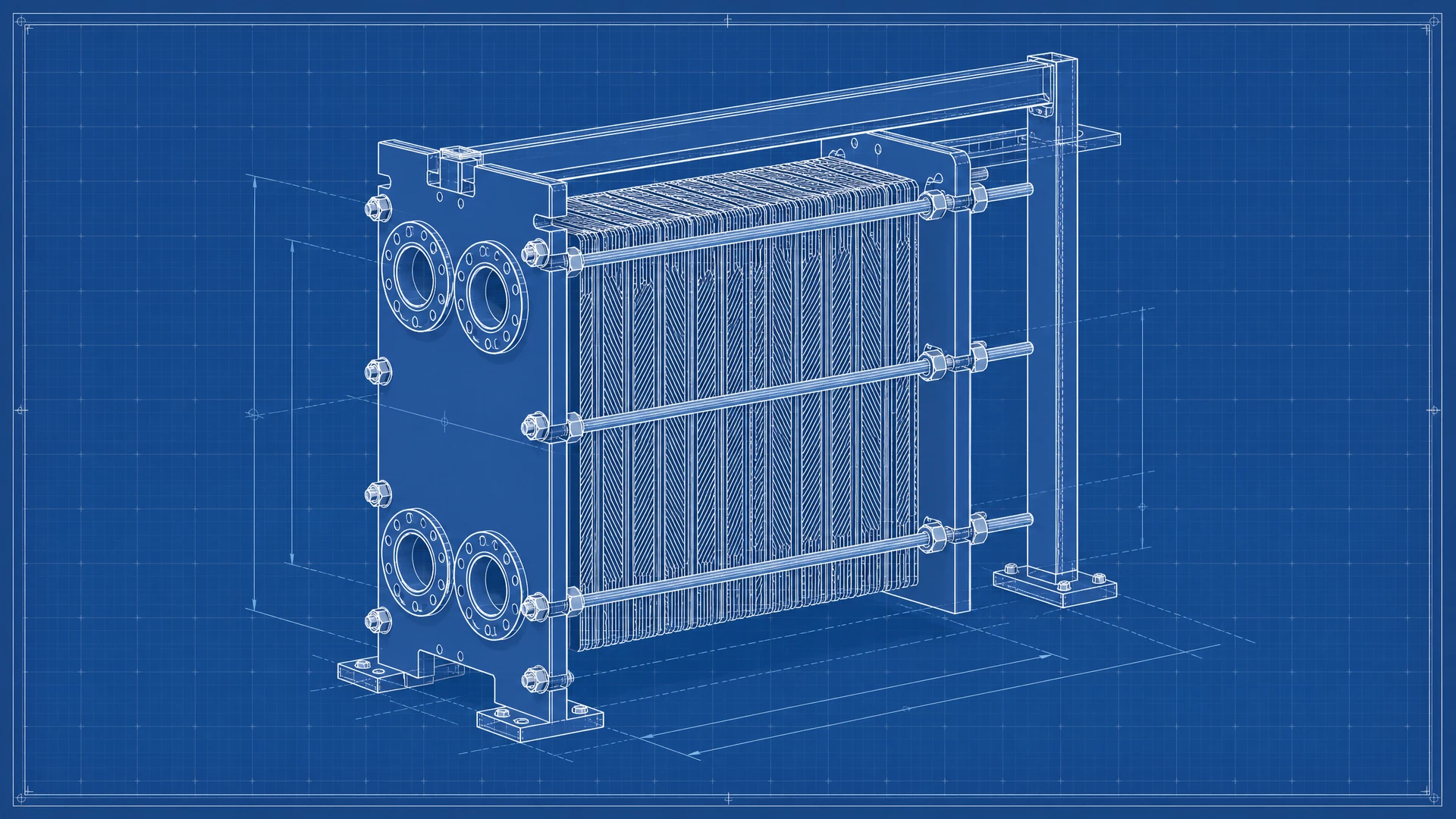
Plate-and-Frame Heat Exchangers in Pulp and Paper
A plate and frame heat exchanger (PHE) is a compact device designed for efficient liquid-to-liquid heat transfer. It consists of a series of corrugated metal plates assembled between a fixed frame plate and a movable pressure plate, compressed by tightening bolts. In a pulp or paper mill, the documented process context matters: The pulp and paper industry relies heavily on heat exchangers for process heating, chemical recovery, and energy efficiency. Key applications include blow heat recovery systems, where heat exchangers capture thermal energy from digester blow gases, and multiple-effect evaporators, which concentrate black liquor by evaporating water using steam.
This page combines the approved plate-and-frame heat exchangers identification record with the approved pulp and paper process record. It does not infer condition, suitability, ownership, or value from an industry label alone.
Identification and documentation checklist
A seller should connect the physical unit to its service and records before requesting evaluation. For this intersection, document both the asset construction and its actual pulp and paper duty.
- Check for gasket type and condition (elastomeric, brazed, or welded).
- Note the number of plates and plate material (e.g., stainless steel, titanium).
- Verify maximum operating pressure and temperature ratings.
- Identify plate pattern (e.g., chevron or herringbone) and dimensions.
- Verify system role (e.g., blow heat recovery, evaporator, or preheater).
- check for material specifications suitable for corrosive Kraft liquors.
Condition and value factors
Plate and frame heat exchangers offer high thermal efficiency due to large surface area. That technical characteristic is only one input; current condition, completeness, documentation, demand fit, installed scope, and logistics also influence review.
Designed for high-fouling and corrosive environments typical of pulp and paper mills. Service history and residual-process disclosure should therefore be evaluated with the equipment record rather than treated as an automatic positive or negative value conclusion.
- Current photographs and readable nameplate
- Dimensions, weight, quantity, and installation state
- Known metallurgy and service fluid
- Inspection, cleaning, repair, and operating history
- Seller authority and intended disposition timing
Commercial review boundary
Submission requests a fact-based buying review. It does not guarantee purchase, price, payment timing, removal, loading, freight, or reuse. Those terms require separate written confirmation after the equipment and project facts are reviewed.
Page-specific questions
Frequently asked questions
Can used plate-and-frame heat exchangers from pulp and paper be submitted?
Yes. New-surplus, used, damaged, and scrap-condition equipment may be submitted. The records and observable condition determine the appropriate evaluation path; submission does not guarantee purchase.
Which records should be included?
Include the nameplate, equipment tag, data sheet or drawing when available, metallurgy, service, dimensions, weight, quantity, operating and inspection history, current photographs, location, and installation state.
Does the industry or material name determine value?
No. An industry, configuration, or alloy label does not establish value by itself. Identification, condition, completeness, documentation, demand fit, access, removal scope, and logistics are reviewed together.
Technical references
Secure equipment submission
Request a review for this heat exchanger
Required fields are marked. Share the equipment, condition, location, access, and supporting records available for review.